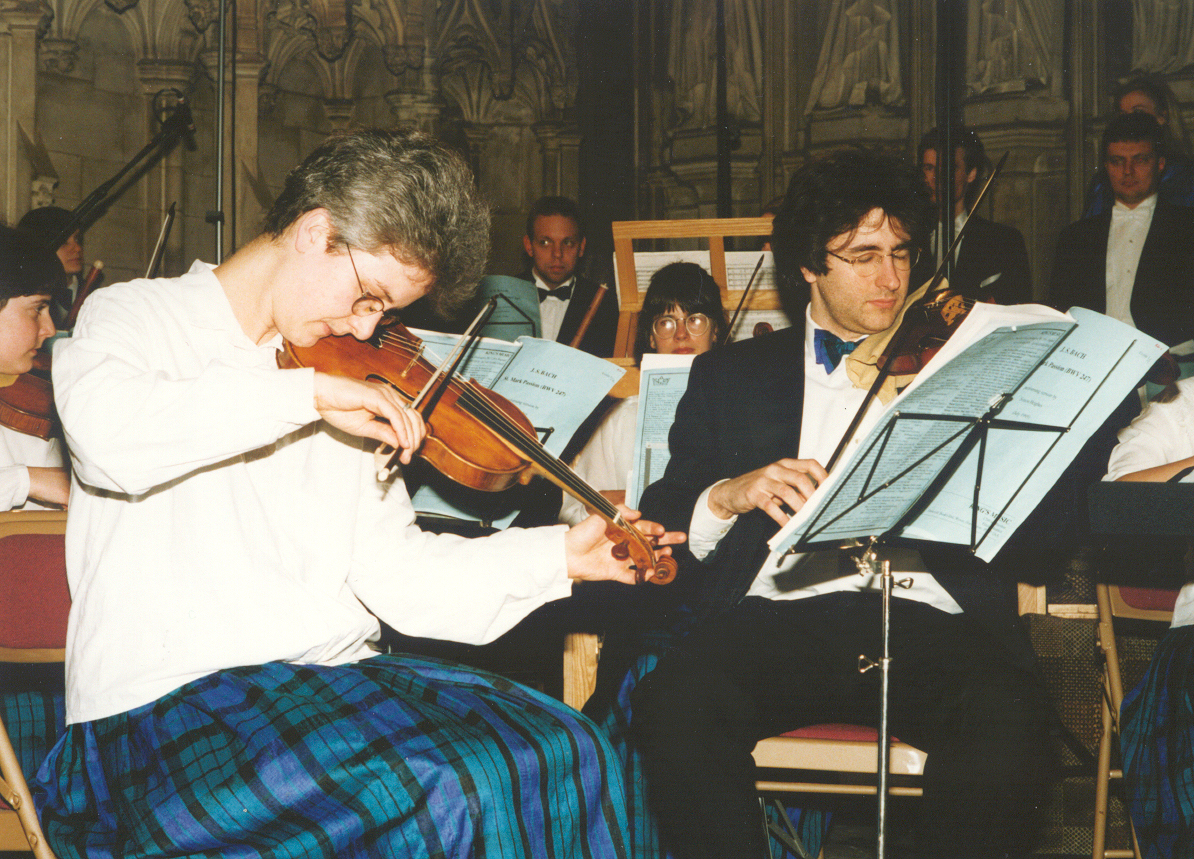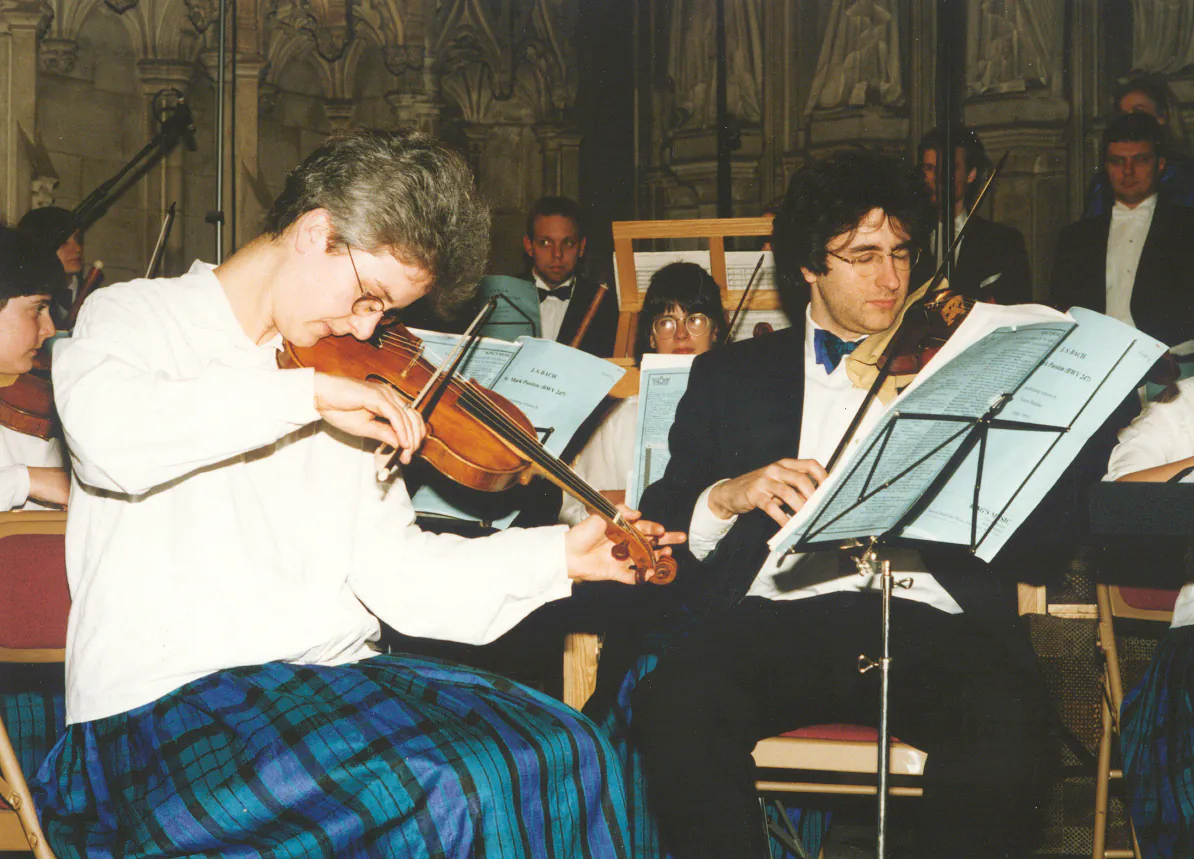
Intercultural dialogue
“My first time with ECBO was in 1992, a last-minute call. Monica Huggett needed a new leader. Living in Leipzig after The Wall fell, I had no phone, but luckily, an elderly couple in my building (also called Schumann) did. That’s how Paul James and Emma Wilkinson reached me. I arrived in the middle of nowhere in Finland. My English was poor, I was nervous, and Monica felt unwell, so I had to lead the first rehearsal alone. A lot to handle, but I managed, and even enjoyed it. The students came from everywhere, with different styles and personalities. A challenge but rewarding.
Showing them details taught me a lot. It wasn’t just the rehearsals; the time in between was fulfilling. I’d been in student orchestras before, but this was my music. I felt like an ambassador. The group was smaller than the Mahler-sized ones, so we grew close quickly. We enjoyed the sauna, the lake—and once I even had to row out and rescue a violist! Touring in different countries was exciting. In Aldeburgh, England, a storm hit during Handel’s Concerto Grosso. Just when everyone was to join in, the lights went out. We had to stop, then restart when the lights returned.
On another tour with Roy Goodman, we’d play Mozart’s 1st Symphony with tuned beer bottles. After a concert in Italy, the bus broke down at night. We found a crate of beers, tuned them, and played on the motorway until the bottles were empty! There are so many memories beyond concerts: touring with The Hilliard Ensemble, a freezing Oxford lunch, Paul’s warning not to buy too many carpets in Turkey, free days in Athens and Istanbul, tiny rooms in Bruges… I still treasure the friendships I made. It felt special to be “one of them, of EUBO”. In these chaotic times, it’s moving to see young people united by music. It’s so important to give them the chance to meet, to share ideas, passion and pride in creating something together. Music is a language of peace. Playing means listening, reacting, giving your best for the whole. As concertmaster, I learned a lot. You’re the link between the players and the director. You must lead, inspire, and bring people together. It wasn’t always easy—but the concerts made it all worthwhile. That experience shaped my life as a freelance musician”.
Anne Schumann