Timeline 1985-2025: 40 Years
Highlights from a Remarkable History
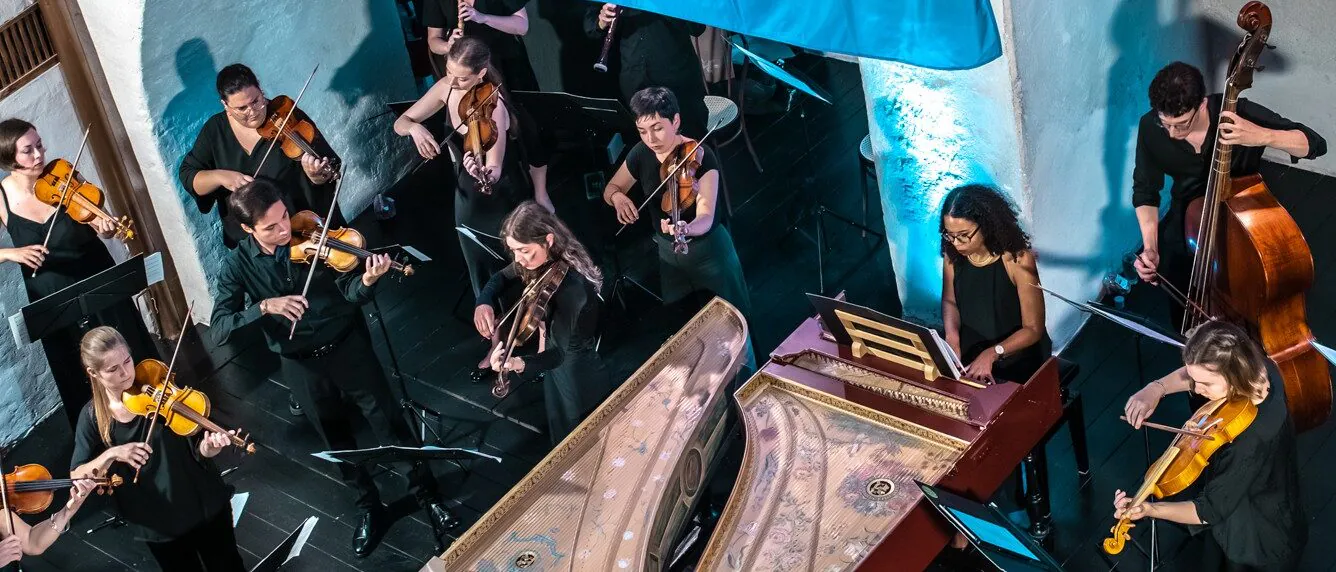
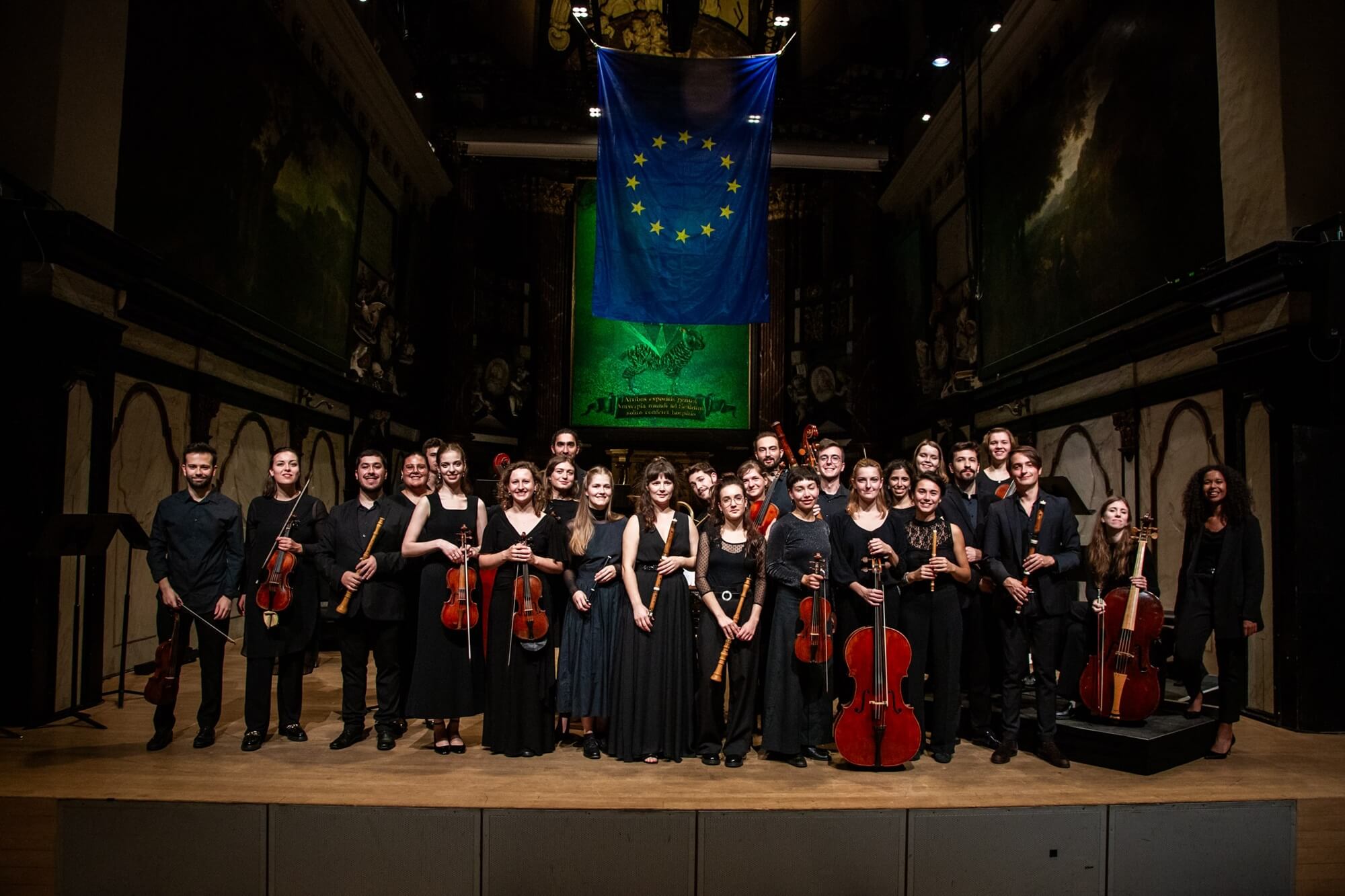
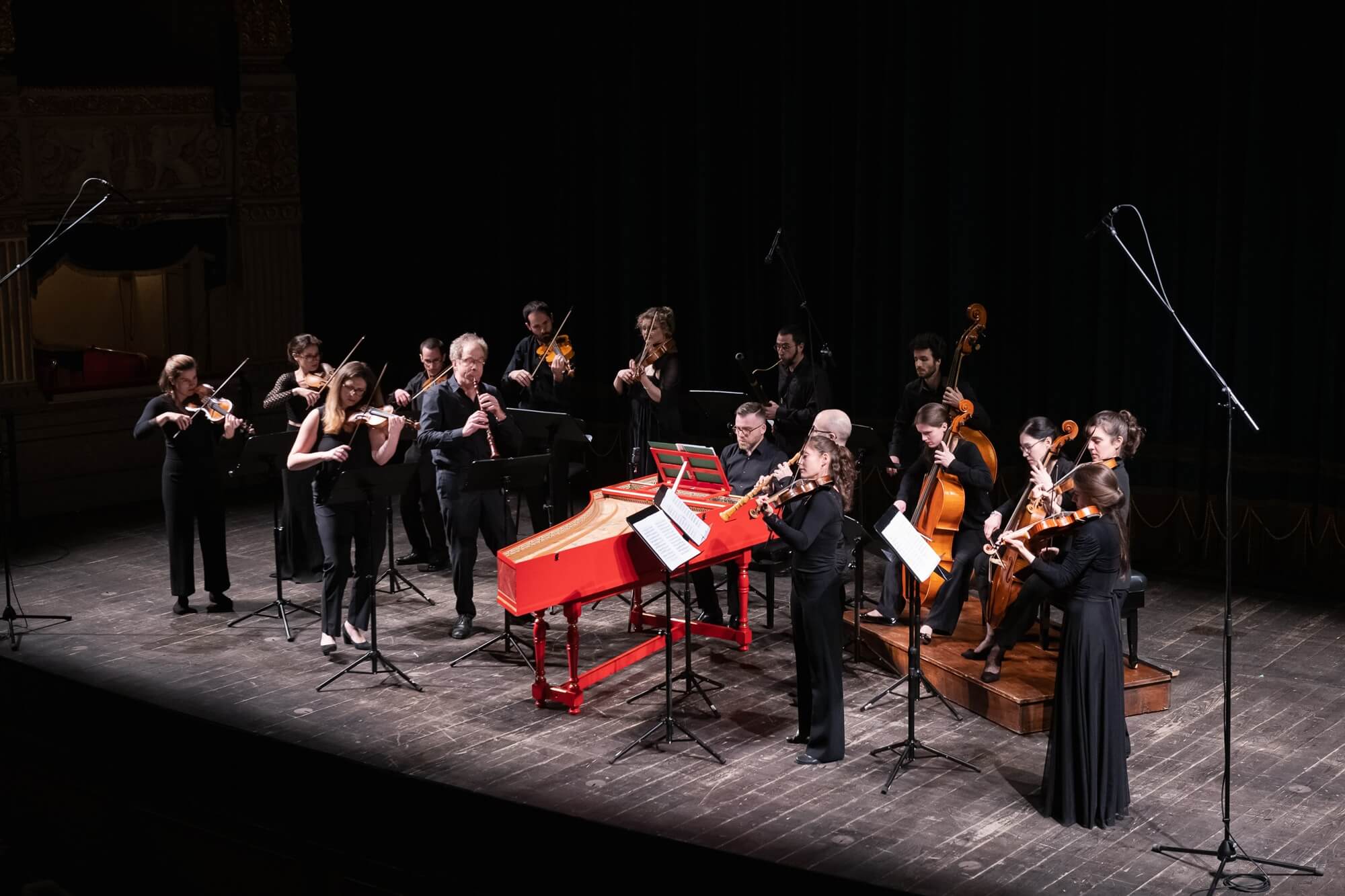
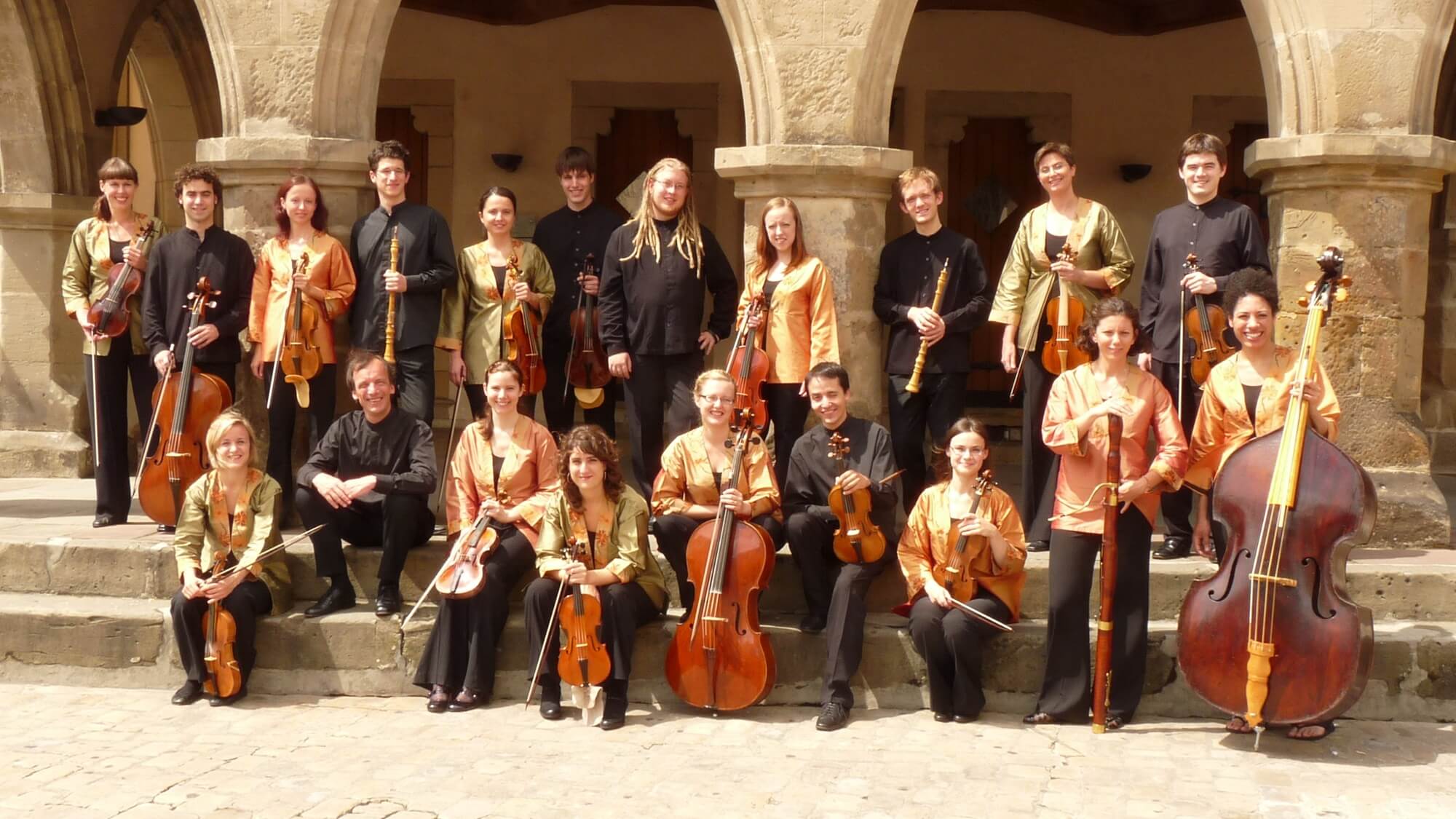
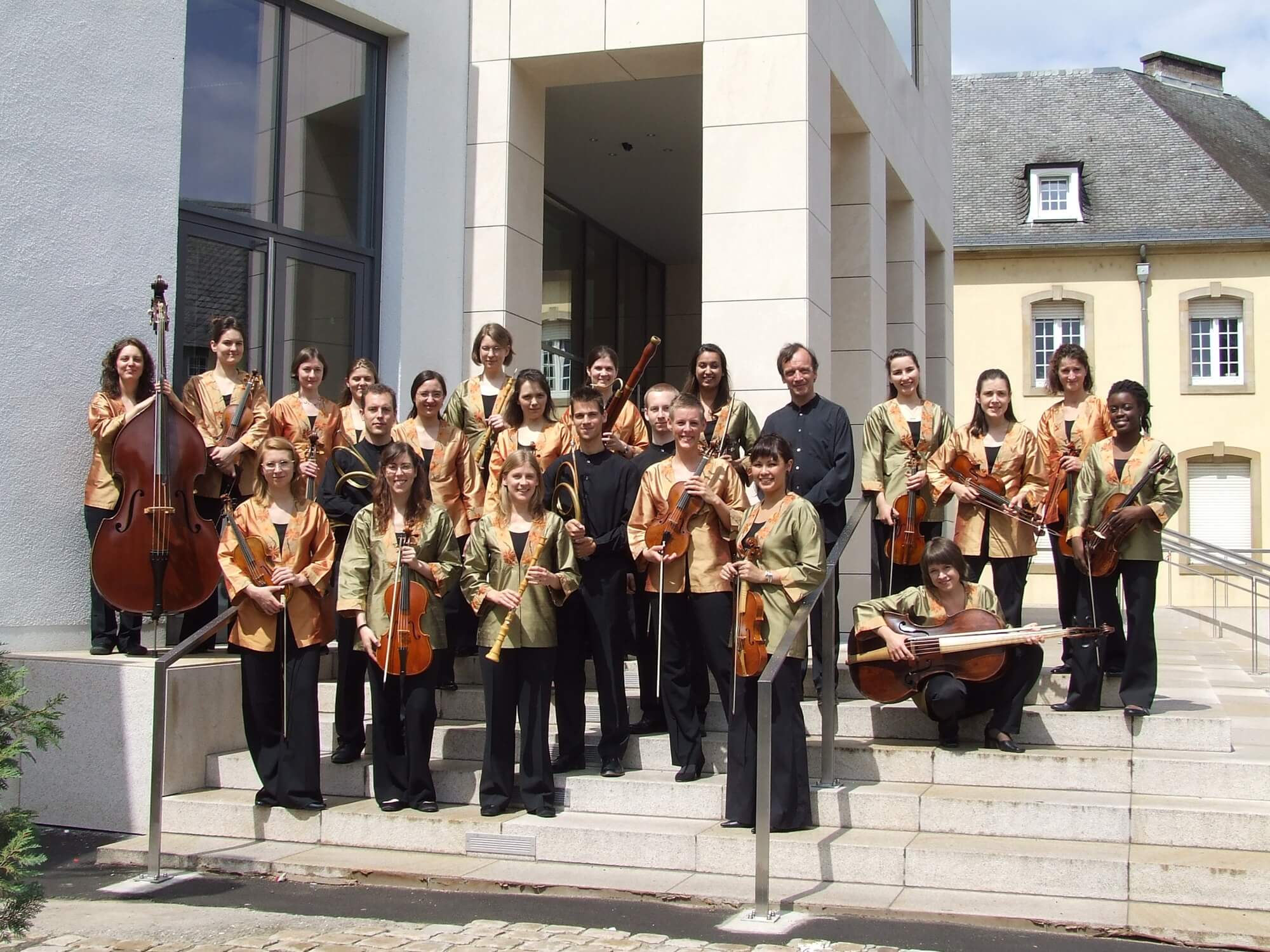
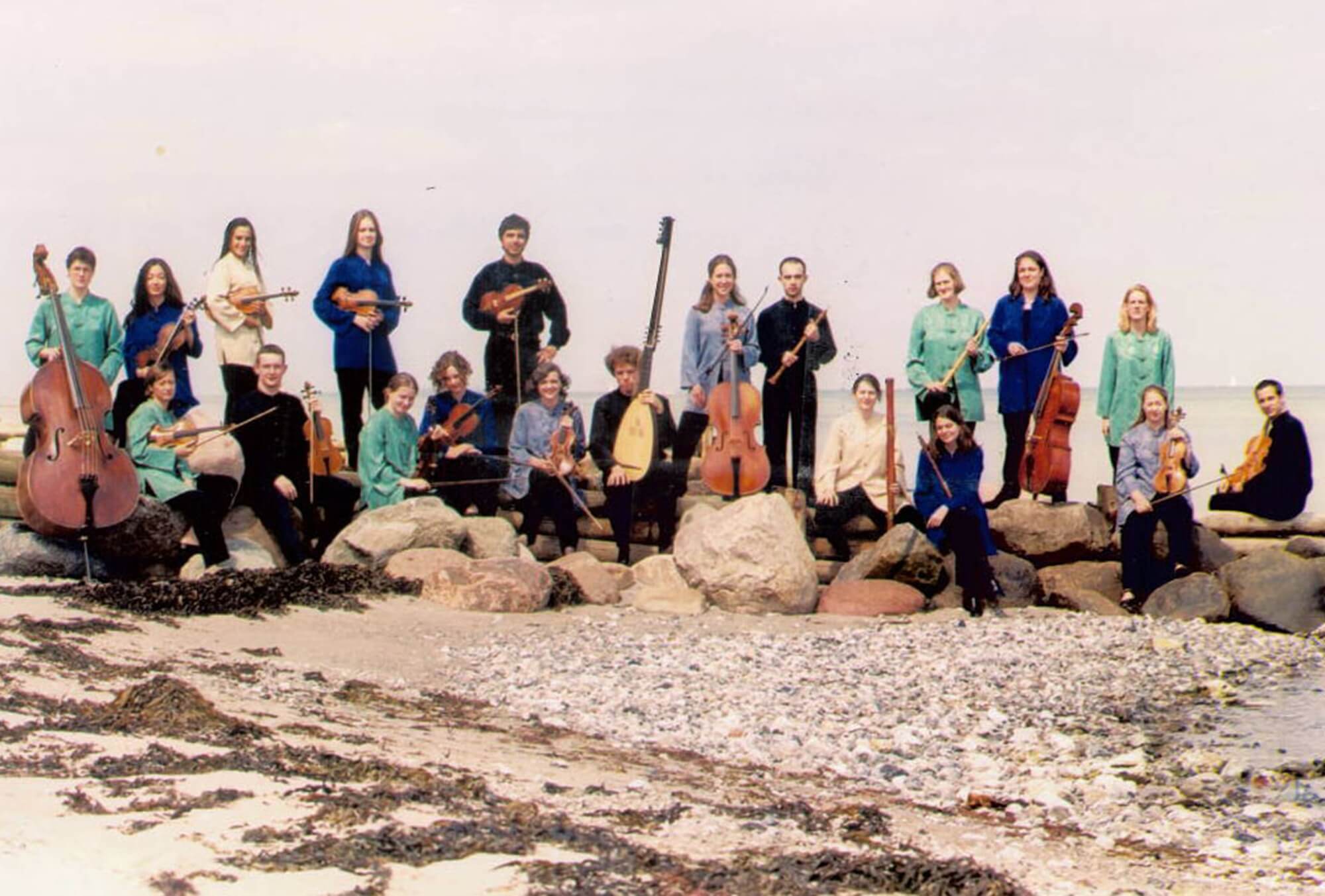
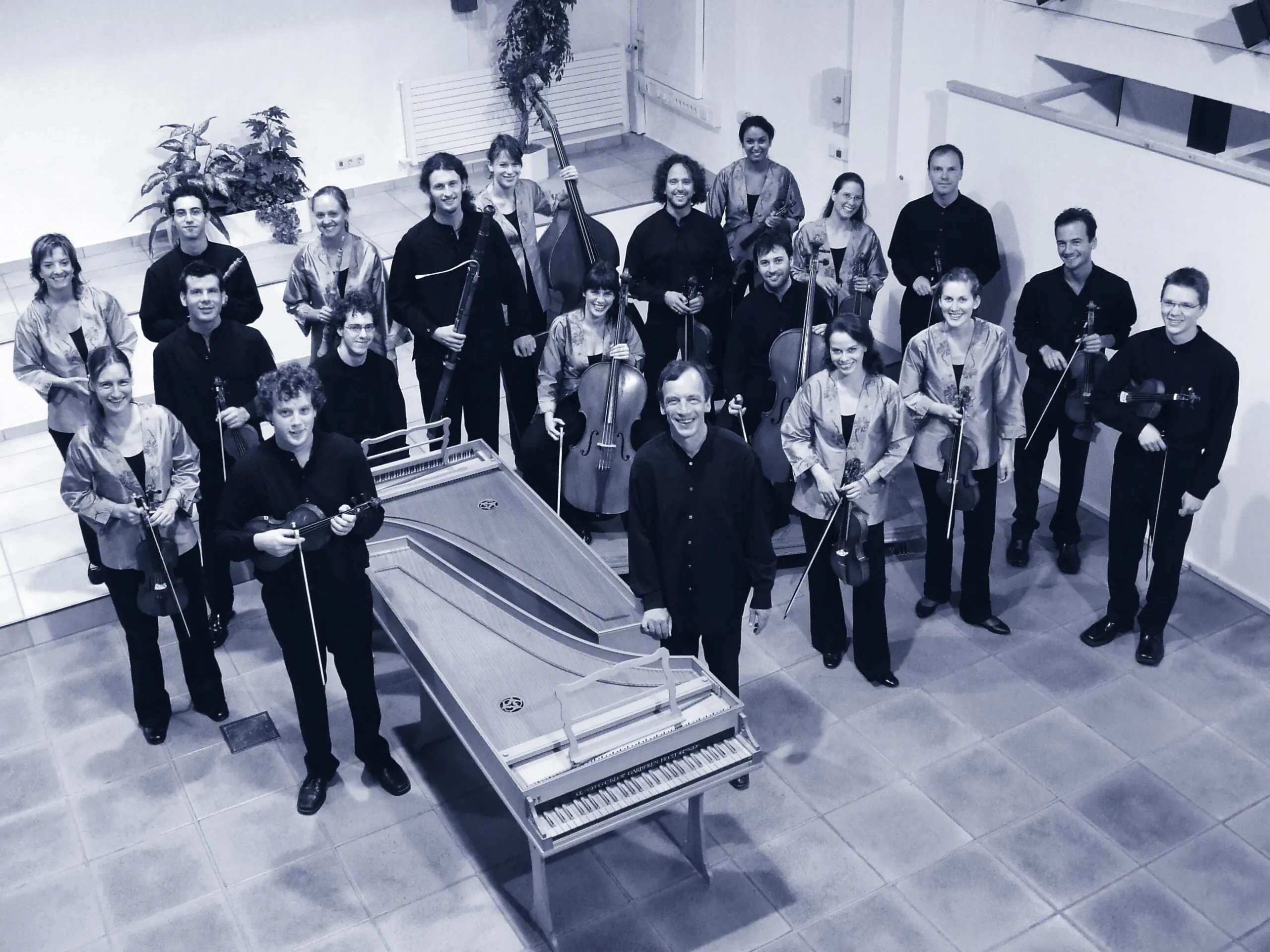
EUBO’s musicians come from across Europe, and the orchestra is completely renewed each year. Yet despite its ever-changing lineup, EUBO has a unique and powerful identity that immediately resonates with audiences—proven by its performances in 54 countries around the world.
While the orchestra’s name has evolved in line with developments within the European institutions, its spirit has remained unchanged. Founded as the European Baroque Orchestra (EBO), it became the European Community Baroque Orchestra (ECBO) from 1988 to 1993, before adopting its current name in 1994—the European Union Baroque Orchestra.
The history speaks for itself. In this timeline, we revisit some of the key moments—a glimpse (even though not an exhaustive account) into the orchestra’s glorious past.
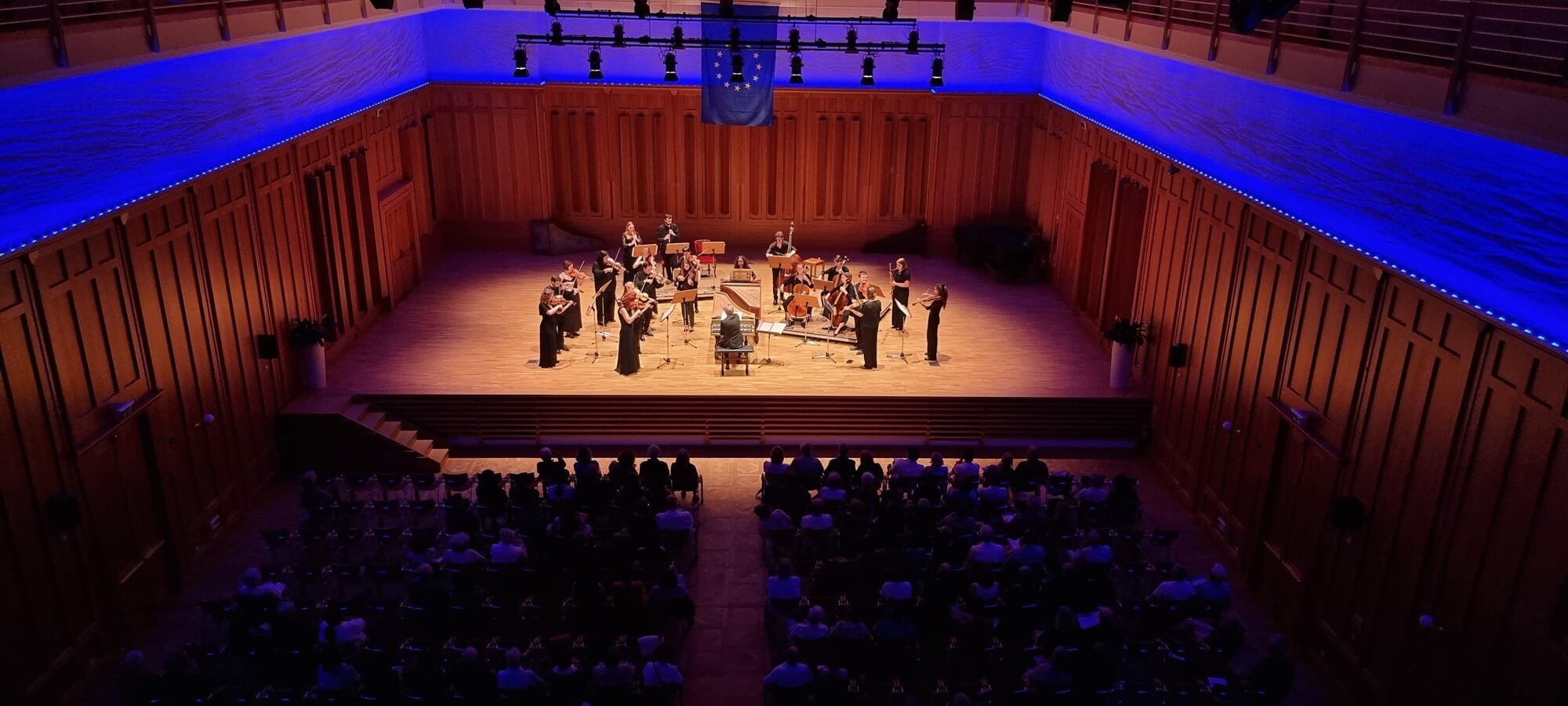
The orchestra celebrates its 40th anniversary in splendid shape, honouring a legacy that is both artistic and politically significant. As a Cultural Ambassador and instrument of intercultural dialogue, EUBO’s role remains highly relevant and its values strikingly current.

EUBO successfully resumes musical activities with performances and tours, amongst others, in Poland (Wratislavia Cantans Festival), Belgium (AMUZ), Italy (Bolzano Festival Bozen – Kulturzentrum Toblach), and Germany (Kloster Michaelstein).

New auditions take place at AMUZ in Antwerp: after young baroque instrumentalists met for an intense musical workshop over several days, 20 new members are selected and EUBO is ready to restart its activities as Cultural Ambassador of Europe’s baroque heritage.

After a period of silence following Brexit and Covid-19, EUBO’s management is taken over by ICONS in continuity with the former leadership. With a new home in Italy, the artistic direction is entrusted to Mario Martinoli. A relaunch project is led by Alfredo Bernardini.

The EUBO Mobile Baroque Academy (EMBA) is created to expand opportunities for young baroque musicians pursuing professional careers, building on EUBO’s 30-year track record of training and supporting young EU orchestral players.

With the support of EU Commissioner Viviane Reding, EUBO becomes orchestra-in-residence at the Trifolion Centre in Echternach, gaining a base for auditions and rehearsals, and serving as the main ensemble of the Echter’Barock festival.

With the EU’s enlargement from 15 to 25 member states, EUBO welcomed more musicians and artistic partners from Eastern Europe. This shift brought new perspectives, further enriching the orchestra’s diversity and strengthening its European identity.

After many collaborations with EUBO as a regular harpsichord tutor and guest director, Lars Ulrik Mortensen is appointed Music Director in 2004, marking a new artistic chapter.

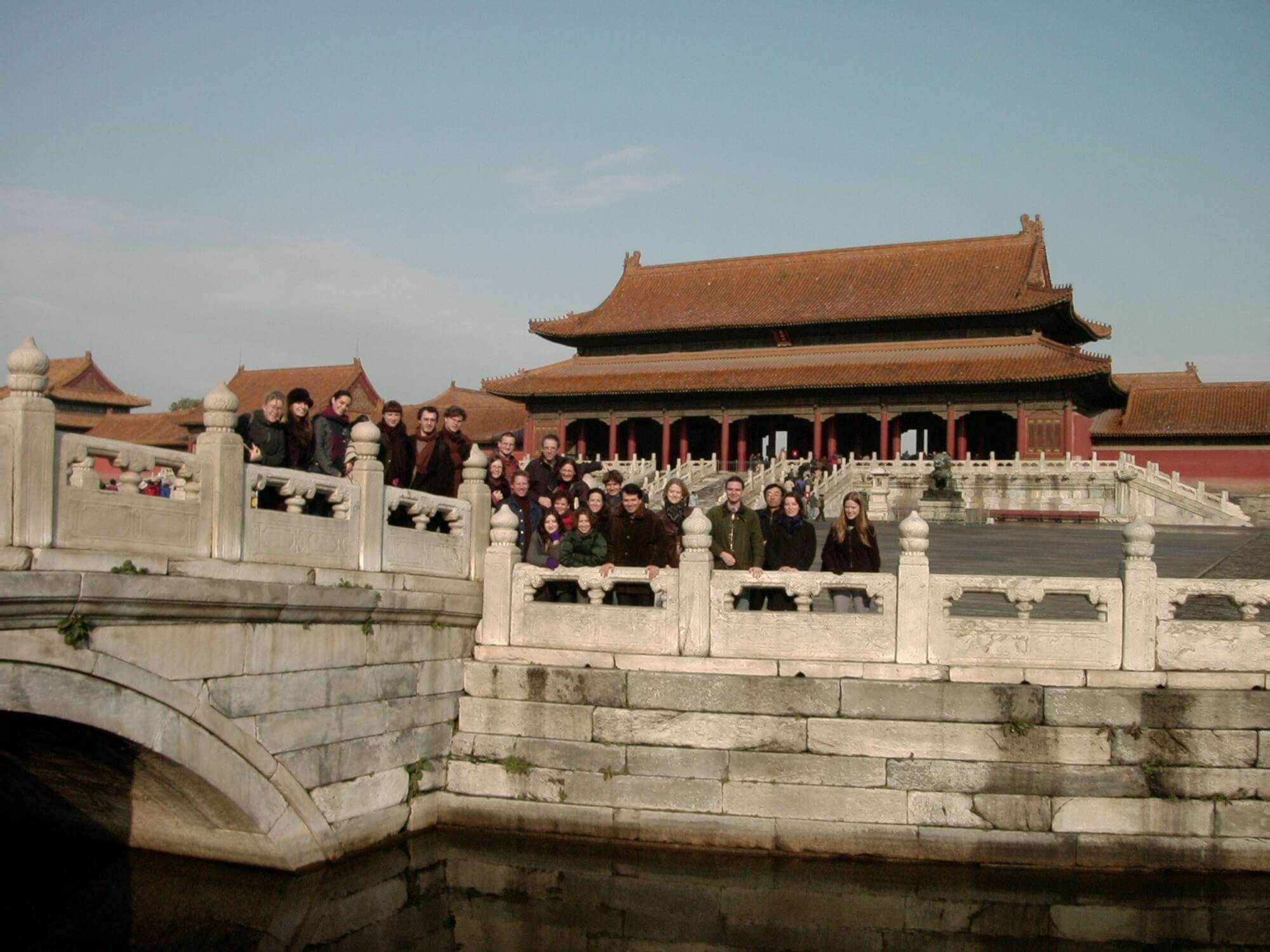
The orchestra made its debut in China under the direction of Alfredo Bernardini, becoming the first Baroque ensemble to perform in the country, with performances in Beijing and Shanghai.

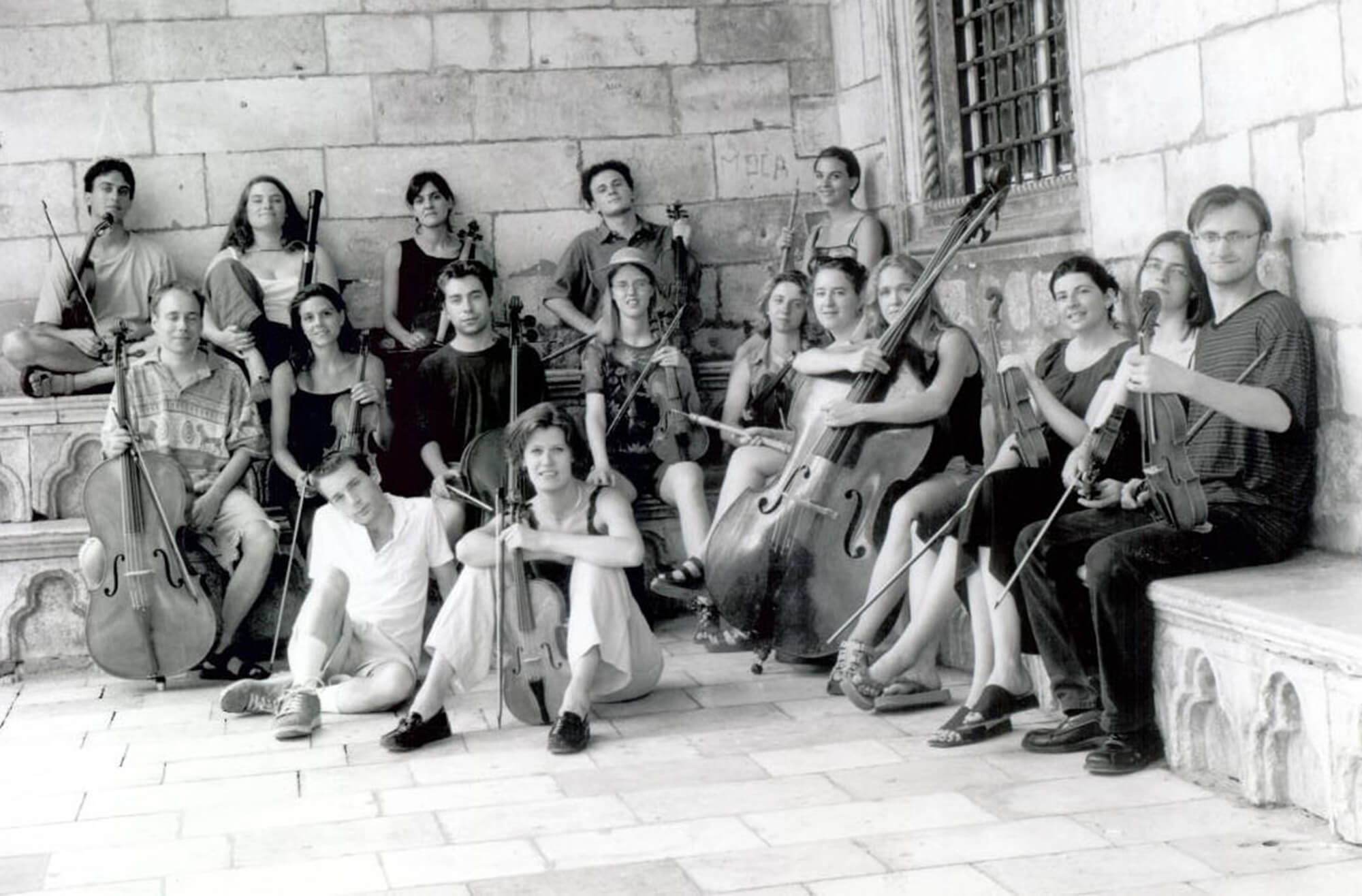
After the war in Bosnia and Herzegovina, EUBO performed at the Pavarotti Music Centre in Mostar—a space for cultural encounter between communities, including Muslims and Christians, where music played a vital role in healing children affected by the conflict.

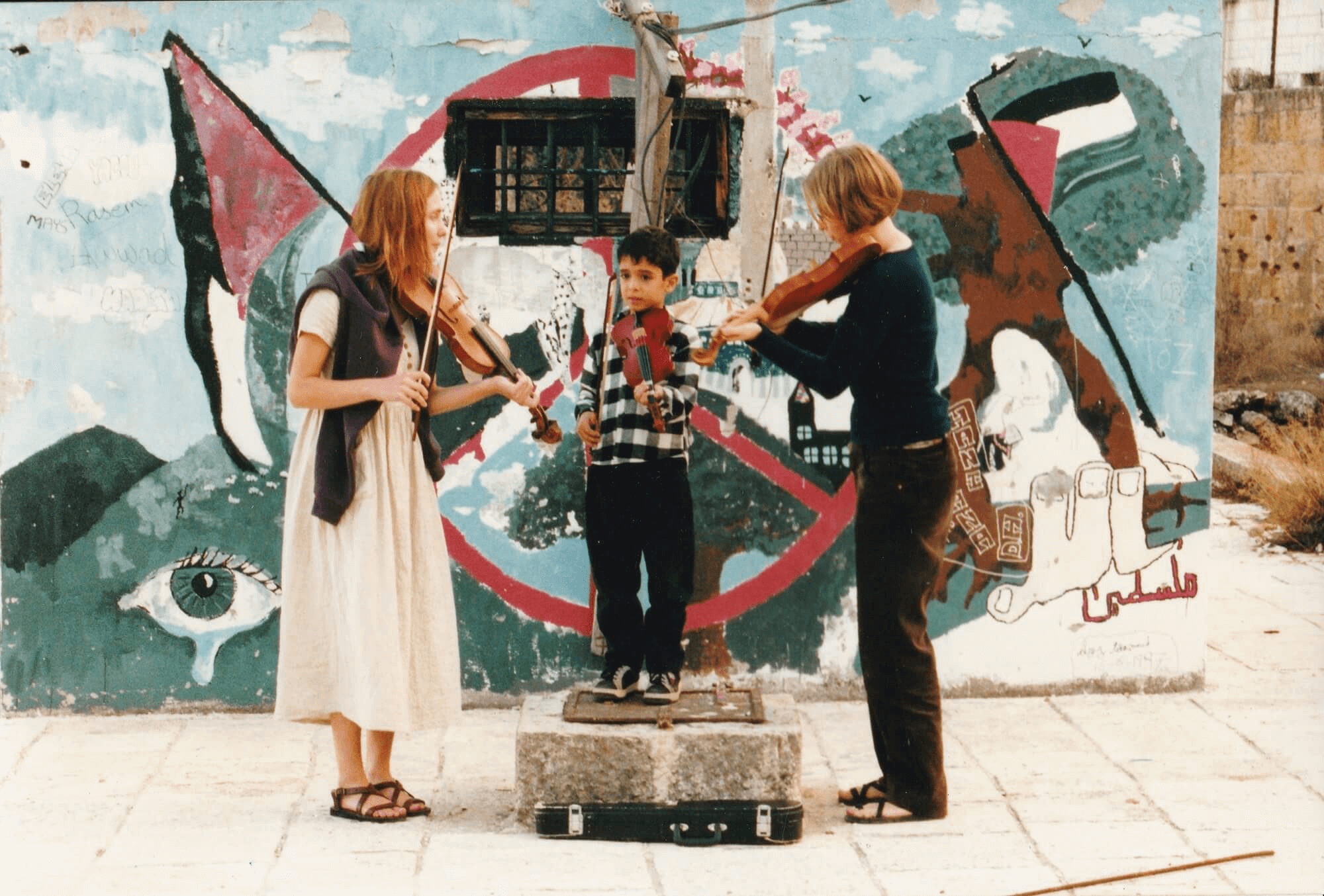
EUBO plays an active role in the EU’s outreach initiatives in troubled regions, EUBO became the first period-instrument orchestra to visit Syria and the occupied Palestinian territories, fostering cultural exchange through concerts and workshops in Damascus, Ramallah and Gaza.

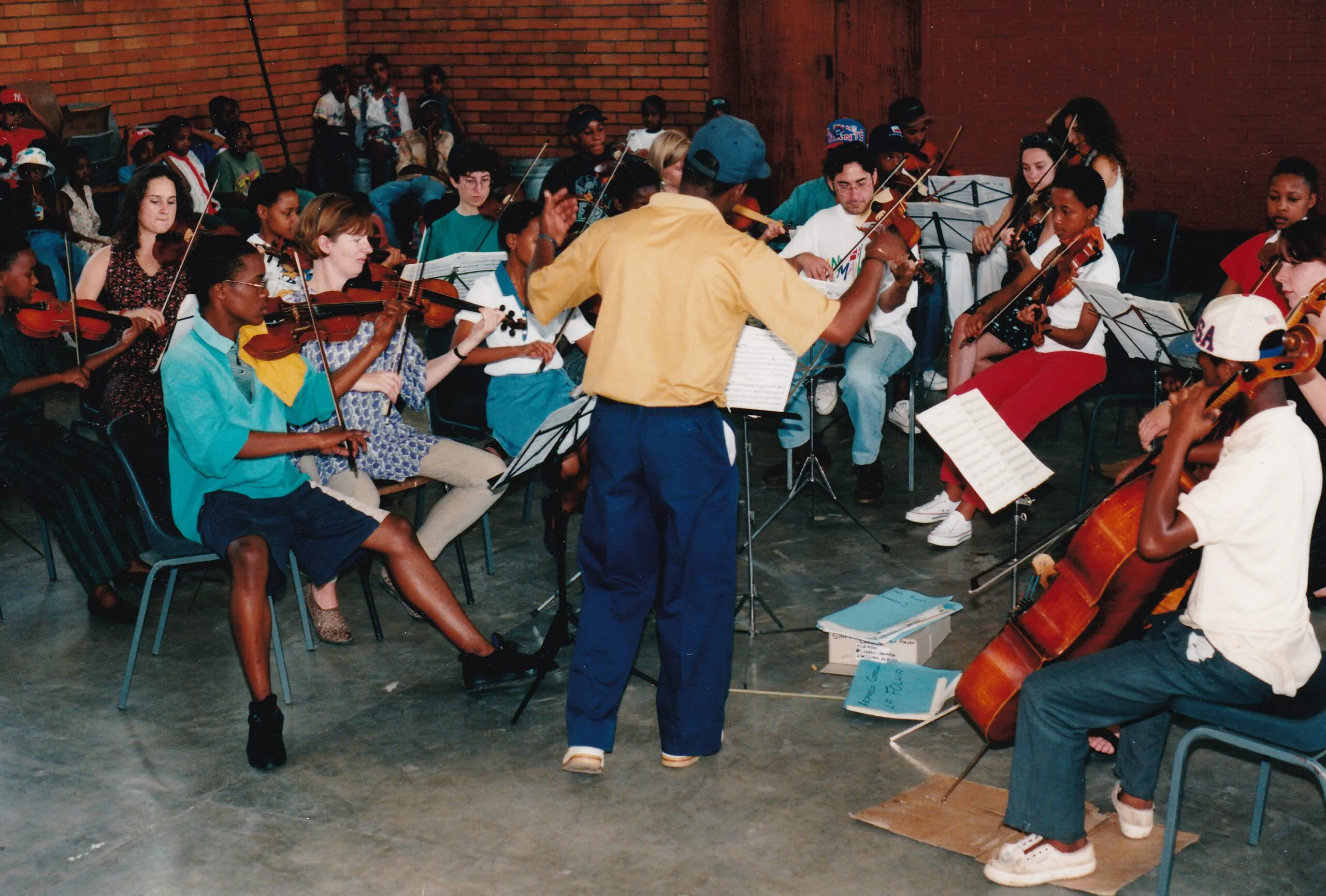
With European Commission support, EUBO toured South Africa and Botswana in collaboration with local partners. Concerts, masterclasses, and joint performances in Soweto, Johannesburg, and Gaborone aimed to bring Baroque music to new audiences and promote the EU’s cultural presence.

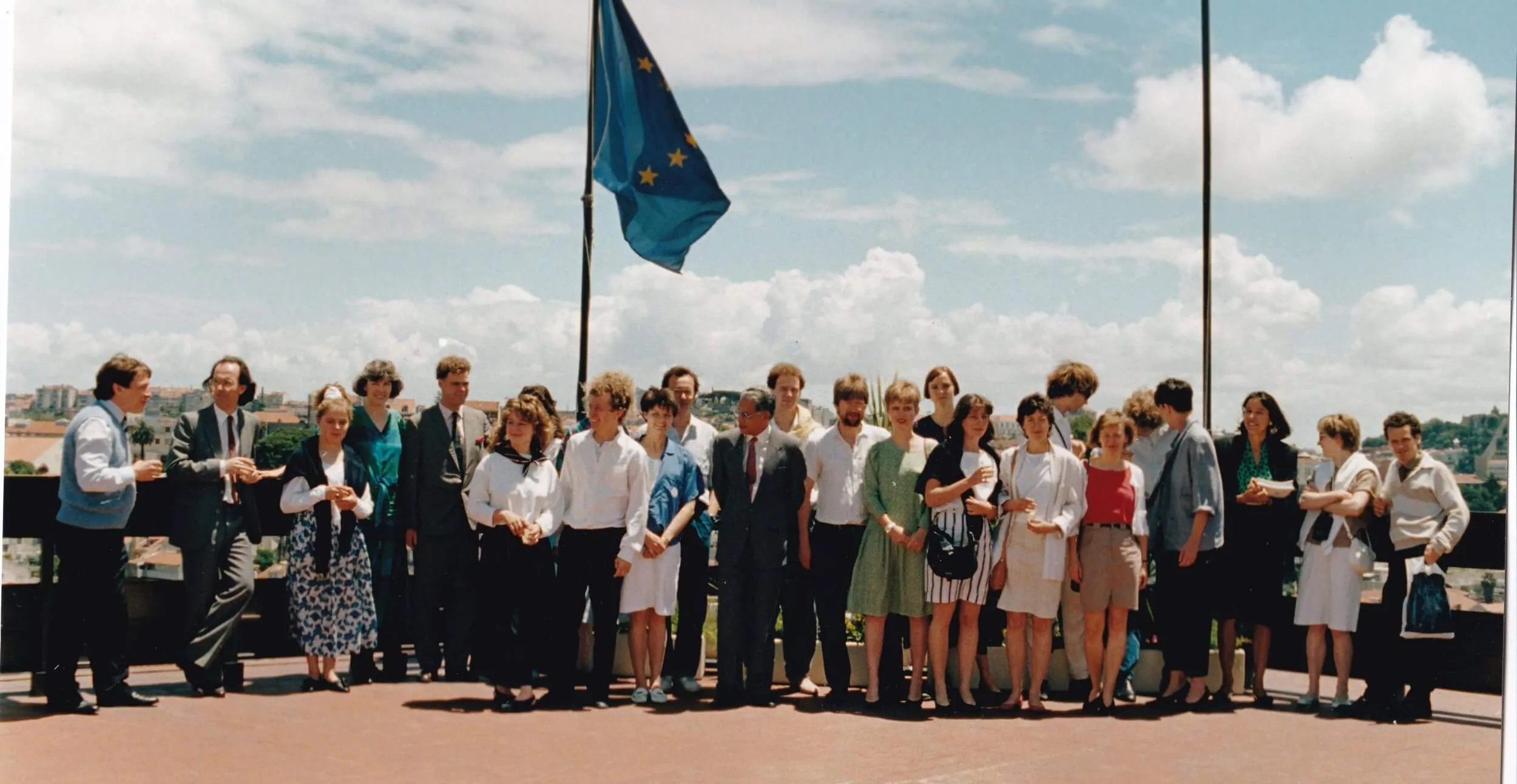
Fostering intercultural dialogue has always been central to ECBO’s mission—gaining particular meaning during Europe’s post–Cold War reunification and expansion, as well as through global tours. A striking example: violinist Anne Schumann’s unexpected call to lead ECBO.

ECBO expands its international reach with tours across multiple continents, performing in the US, South America, Asia (Tour to Japan), Africa, the Baltic states, Mediterranean and Middle Eastern countries—broadening its artistic presence far beyond Europe.

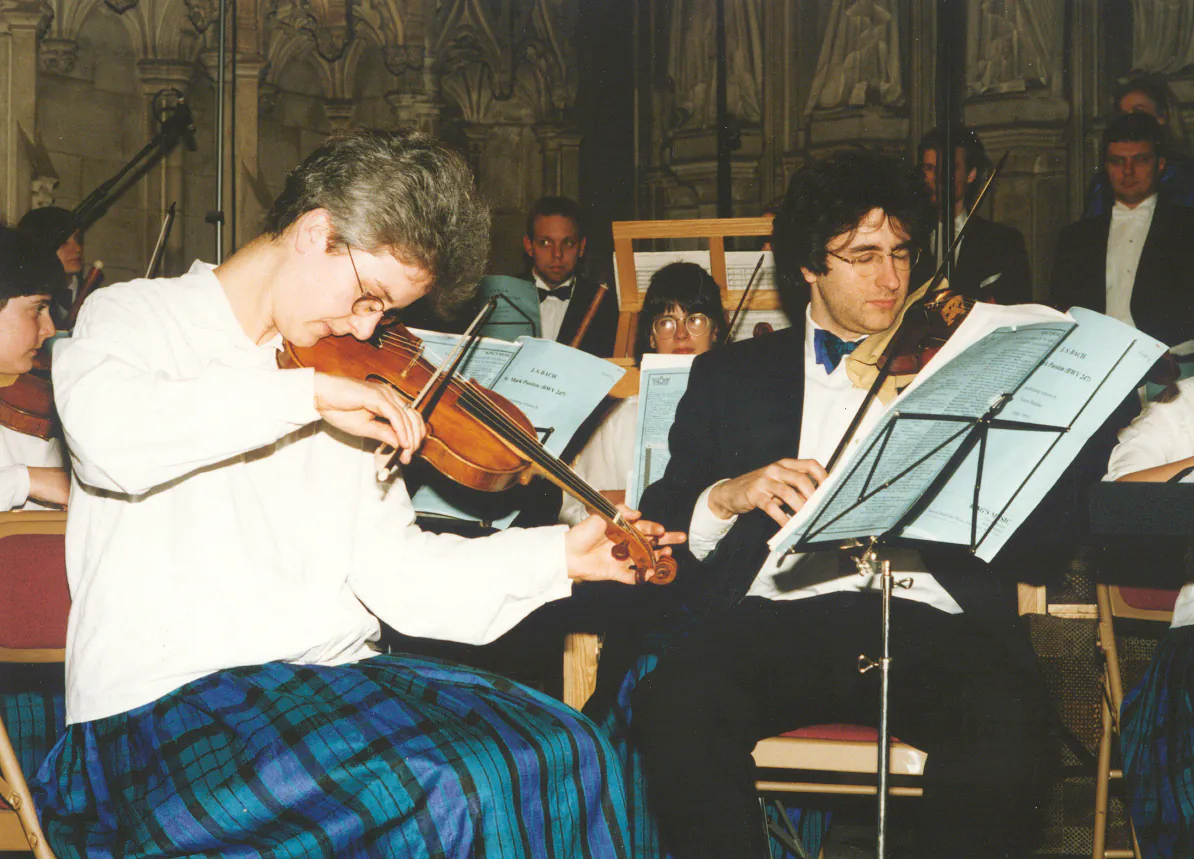
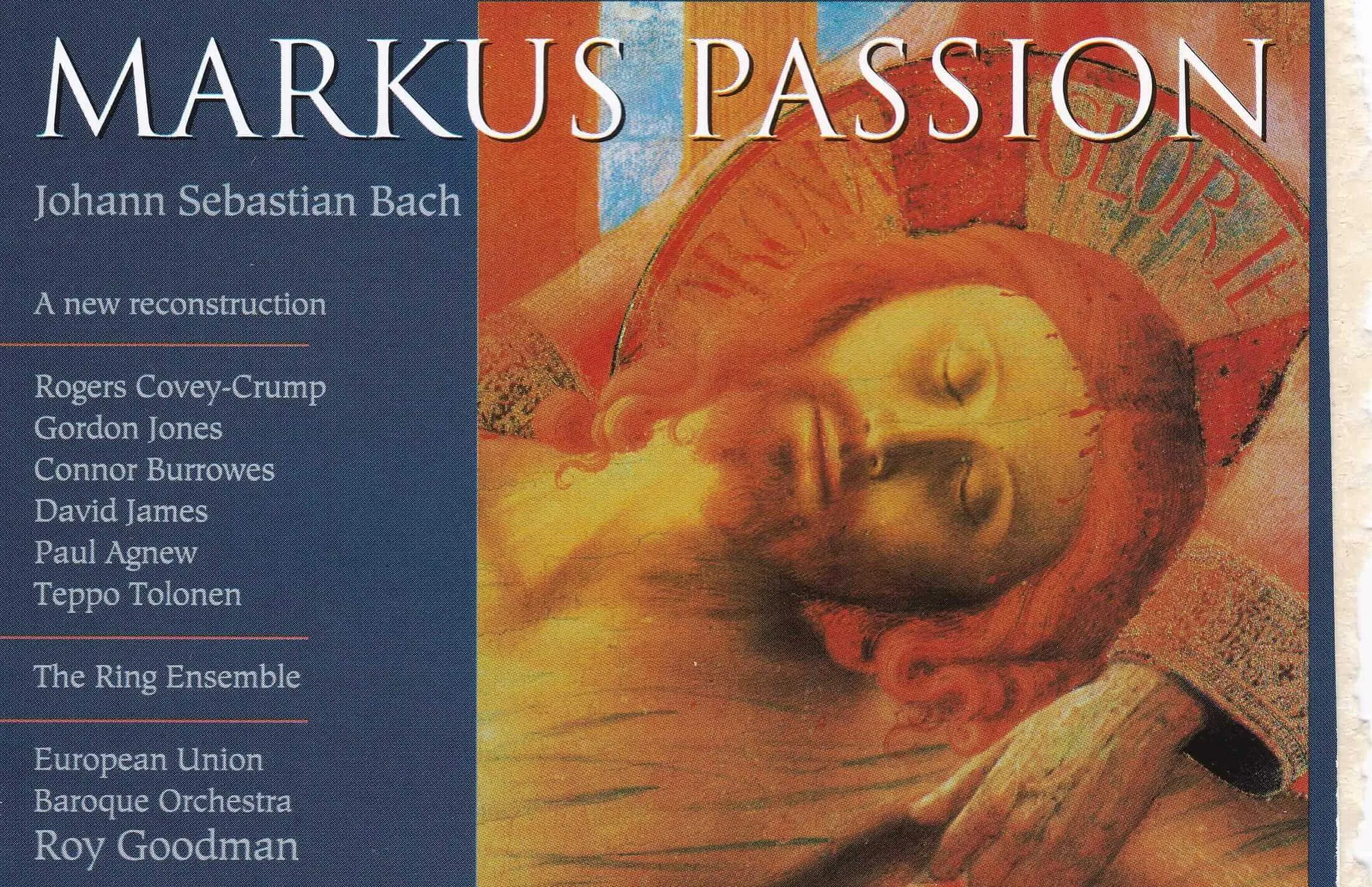
Recording project of Bach’s St Mark Passion, reconstructed by musicologist Simon Heighes and recorded by ECBO in collaboration with conductor Roy Goodman. Based on Picander’s surviving libretto and Bach’s re-use of his own music, the work stands as a significant artistic legacy.

During a tour spanning both East and West Germany, ECBO performed a special concert in Berlin at Friedrichswerdersche Kirche as part of the official reunification celebrations—marking a deeply symbolic and historic moment in Europe’s recent history.

Ton Koopman becomes Musical Director and plays a key role in shaping the auditions into a workshop-masterclass format with orchestral and chamber music sessions —a model still used today. The co-creative process encourages interaction, exchange, and peer learning.

After James Elles, Member of the European Parliament, endorsed the idea of a permanent European Baroque Orchestra, the European Commission and Parliament welcomed the initiative and supported the continuation of the ensemble - then called the European Community Baroque Orchestra.

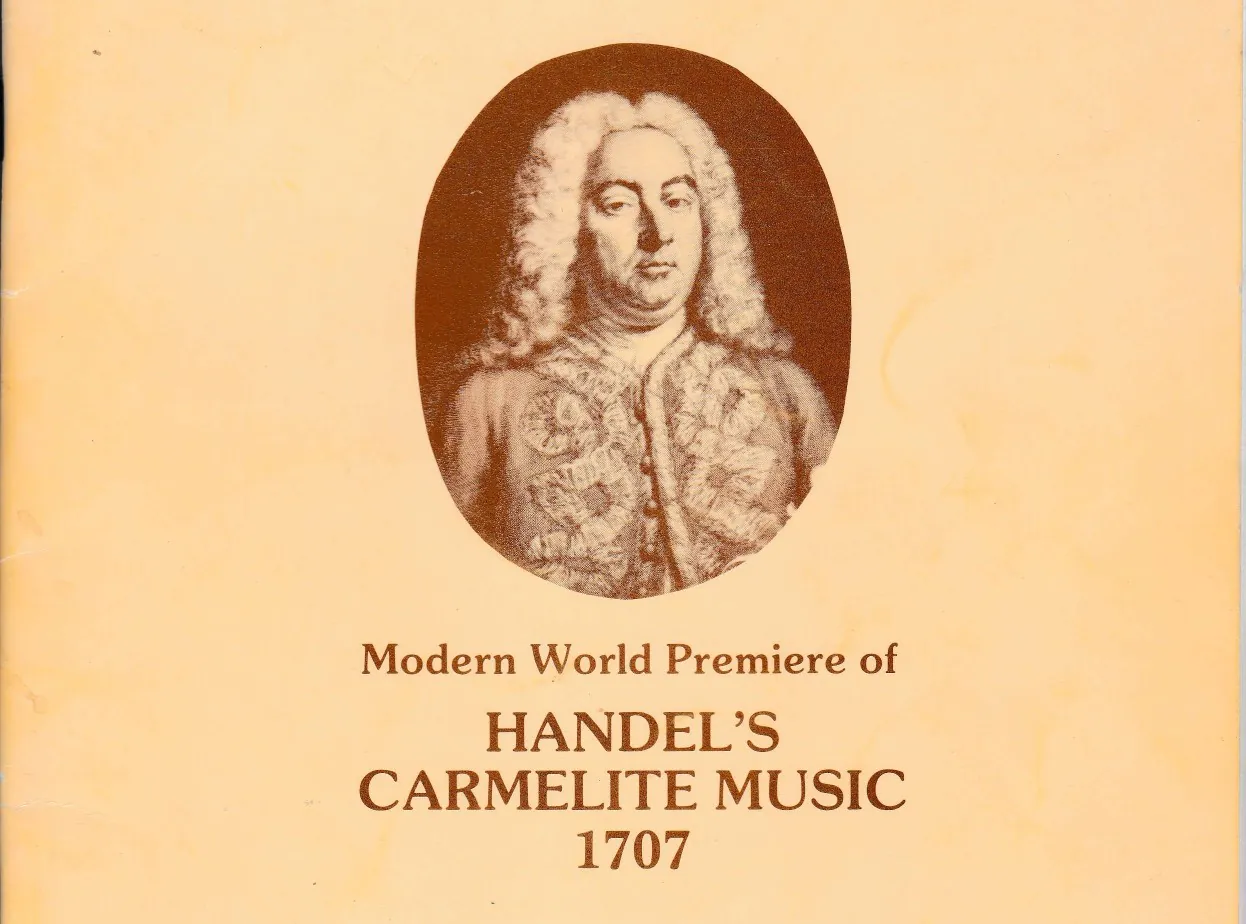
This work was rediscovered in a remarkable trove of manuscripts in Manchester. That same year, EBO performed its modern world premiere under Ton Koopman and returned to Rome’s Santa Maria di Monte Santo, the church for which it was commissioned by the Colonna family in 1707.

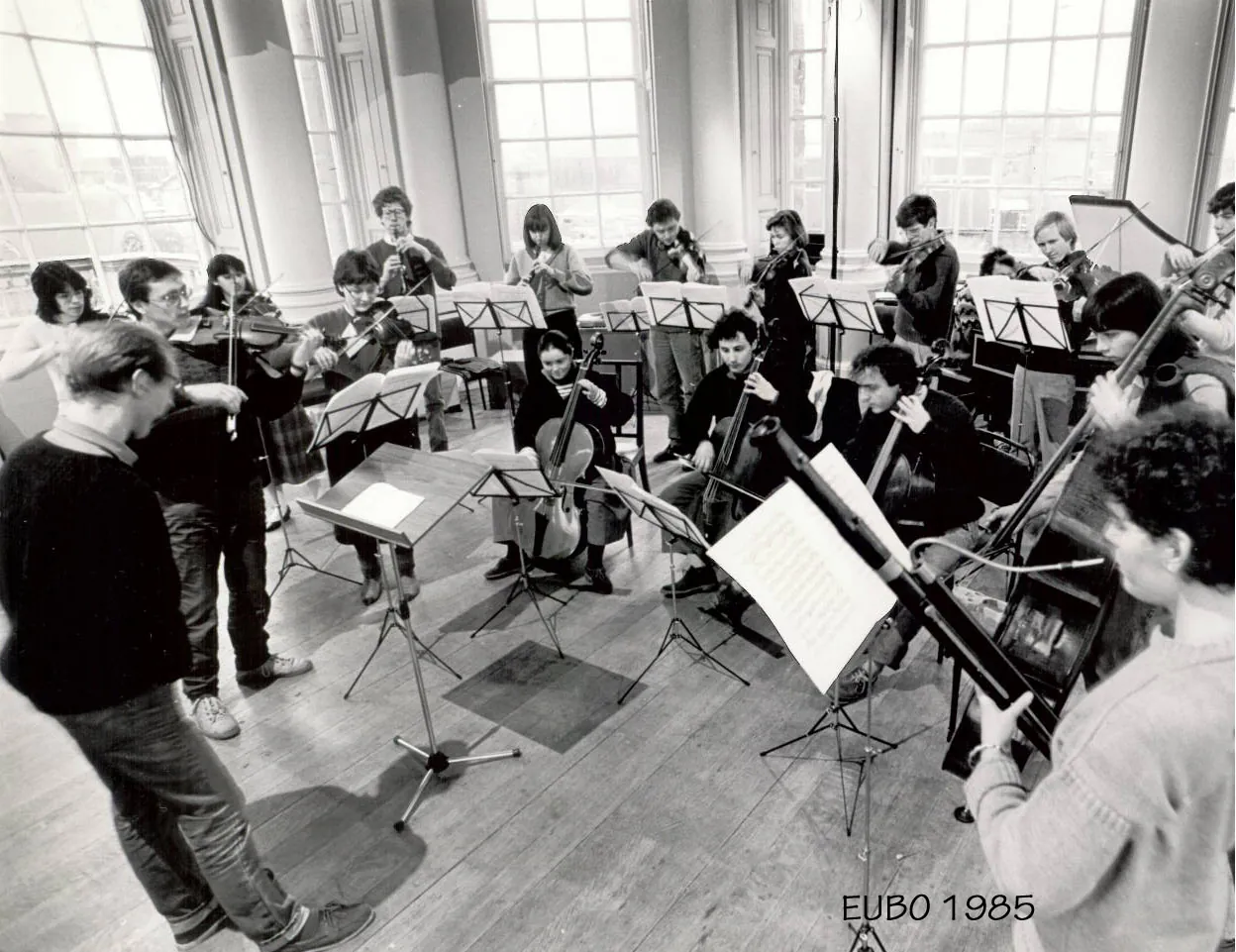
The EBO was founded by Paul James as part of the European Year of Music, celebrating the 300th anniversary of three great Baroque composers: Bach, Handel, Scarlatti. Musicians from across the European Community gathered in Oxford for what was conceived as a one-year project.